Reliable, Trusted and Compassionate Home Care Agency

How to Source Home to Home Care Products in 2026?

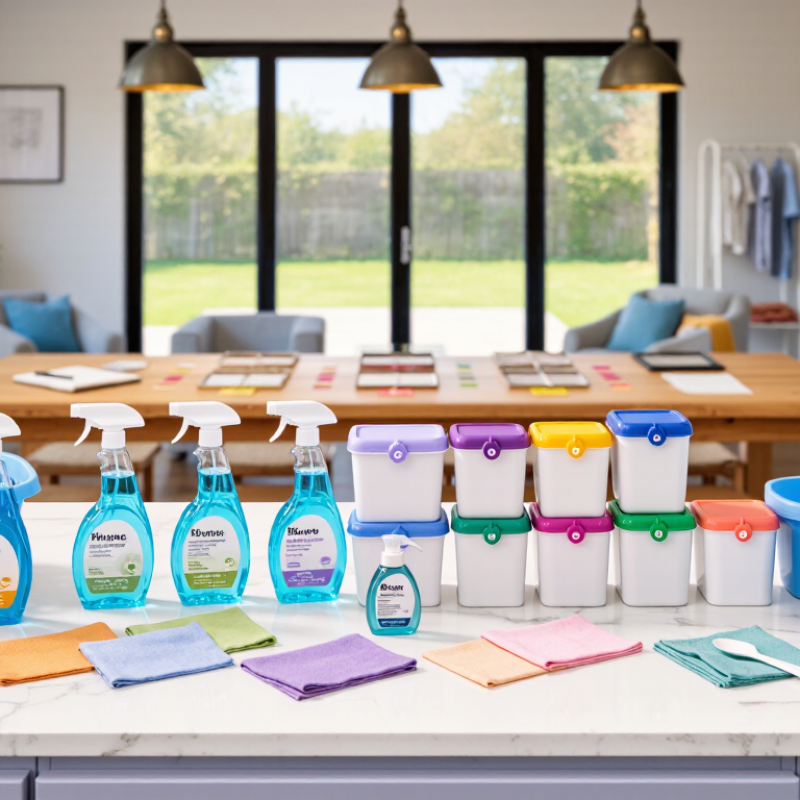
Sourcing home care products in 2026 requires more than finding a low supplier quote. Buyers must connect product quality, household safety, customer expectations, and dependable delivery. The phrase home to home care now covers practical goods such as cleaning tools, refillable containers, laundry accessories, personal care essentials, and small comfort products. Each category needs a different evaluation process.

A reliable sourcing plan begins with a clear product brief. Define materials, dimensions, packaging, expected use, and target price before contacting suppliers. Request samples from several manufacturers, then test them in realistic home settings. Check whether a spray bottle leaks after repeated use. Examine whether a microfiber cloth keeps its shape after washing. These details often reveal more than attractive catalog images.

Supplier verification also matters. Review business records, production capacity, quality procedures, and independent testing documents. Confirm that labels and materials meet the regulations of each target market. Avoid claims that cannot be supported by evidence. A factory may promise fast production, yet its shipping history could suggest otherwise. Ask for references and inspect the supply chain when possible.

Digital sourcing platforms can save time, but they should not replace human judgment. Transparent communication helps uncover weaknesses early. No sourcing plan is flawless. Even experienced buyers can overlook packaging waste, seasonal delays, or changing consumer habits. Keep written specifications, approve pre-production samples, and monitor every shipment. In 2026, successful home care sourcing will depend on practical testing, responsible partnerships, and the discipline to question convenient answers.

How to Source Home to Home Care Products in 2026?

Define the Home Care Product Category and Sourcing Requirements

Home care sourcing starts with a precise category definition. It may include laundry care, surface cleaners, dishwashing products, air care, and household paper goods. Euromonitor International’s 2024 Home Care data places global category sales above US$200 billion, but market definitions differ. That matters. A supplier may classify a concentrated floor cleaner as a general cleaner, while your buyer expects a refill product. Write the category boundary before requesting quotations.

Define each product by use, format, pack size, and target household. Record ingredient restrictions, fragrance preferences, packaging material, minimum order quantity, lead time, and expected annual volume. The Global Household Cleaning Products Market report by Grand View Research identifies convenience, concentrated formulas, and sustainable packaging as important growth themes. These trends should influence specifications, not replace them. A refill pouch still needs reliable sealing.

Test the details. Request a current SDS, certificate of analysis, ingredient disclosure, stability data, and packaging compatibility results. For liquid products, check leakage after vibration, temperature changes, and repeated opening. For powders, inspect moisture resistance and dosing accuracy. ISO 9001 certification can support process control, but it does not prove product performance. Ask for independent test records when claims involve biodegradability or safety. The OECD’s chemical safety guidance also supports documented hazard assessment and traceable records. I still leave room for error. Suppliers may provide clean samples, yet production batches can vary. Approve a pilot order, retain reference samples, and compare the delivered goods against agreed specifications.

Research 2026 Market Trends, Suppliers, and Product Standards

Sourcing home care products in 2026 requires more than comparing unit prices. Market demand is moving toward concentrated formulas, refillable packaging, low-water cleaning solutions, and tools designed for easier daily use. Buyers also want clearer ingredient information and less excessive packaging. Small details matter, such as a leak-resistant cap, a readable dosage mark, or a handle that stays comfortable after ten minutes of use.

Supplier research should combine documents with direct testing. Request factory profiles, production capacity, sample records, ingredient disclosures, safety data sheets, and recent quality reports. Check whether the supplier can provide batch traceability and stable lead times. During sample reviews, test the product on real surfaces and under ordinary household conditions. A clean-looking sample is not enough. In my experience, packaging sometimes performs well in the showroom but fails after repeated opening, squeezing, or transport.

Product standards also need careful verification in the destination market. Review applicable chemical, labeling, packaging, electrical, and consumer safety requirements before placing an order. Ask for independent laboratory testing when performance or safety claims are important. Avoid vague promises such as “green” or “non-toxic” without supporting evidence. My own sourcing process still has weaknesses. I once focused too heavily on product appearance and underestimated instruction clarity. That mistake showed me that reliable sourcing depends on usability, evidence, and honest supplier communication.

How to Source Home Care Products in 2026?

Projected global growth outlook for major home care product categories, based on published market research estimates for 2024–2029.

2026 sourcing priority

Surface cleaning and laundry products show strong projected growth, supporting demand for concentrated formulas, refill formats, and lower-impact packaging.

Supplier evaluation

Request ingredient disclosure, safety data sheets, test reports, batch traceability, minimum order quantities, and evidence of compliance with the destination market.

Relevant standards

Check applicable detergent, chemical classification, packaging, biodegradability, labeling, and restricted-substance requirements before approving a supplier.

Source note: Category growth rates are rounded estimates compiled from publicly available 2024–2029 market outlooks for household cleaning, laundry care, dishwashing, and air care. Definitions and geographic coverage vary by research publisher; use them for sourcing direction rather than financial forecasting.

Evaluate Manufacturers, Certifications, Pricing, and Minimum Orders

How to Source Home to Home Care Products in 2026?

A reliable manufacturer should explain its process clearly, not only display attractive samples. Request factory registration details, production photos, quality procedures, and recent inspection records. Ask who makes the product and where materials are stored. A video call can reveal crowded work areas or weak labeling controls. I have learned that fast replies do not always indicate strong production management.

Certifications require careful checking. Match each certificate to the product, facility, and export market. Look for current quality-management records, safety data sheets, ingredient documentation, and test reports from competent laboratories. For cleaners, verify pH, stability, packaging compatibility, and required hazard information. A certificate with an unclear scope is not enough. Check the issuing body independently. This step feels slow, but it prevents expensive surprises.

Pricing should include more than the factory quote. Calculate product cost, packaging, tooling, testing, freight, duties, and inspection fees. Request a tiered quotation for several order quantities. Minimum order quantities often depend on formula batches, printed packaging, or filling equipment. Negotiate a smaller pilot order with standard packaging when possible. It may cost more per unit. That is acceptable for testing demand and quality. I once focused too heavily on unit price and underestimated carton waste. The mistake was avoidable. Record every assumption, including lead time, payment terms, replacement rules, and how defects will be handled.

Verify Product Quality Through Samples, Testing, and Audits

In 2026, sourcing home-to-home care products requires more than a low quoted price. A supplier should provide production samples before any large order. Request identical samples from several batches. Compare weight, texture, scent, closure strength, and labeling accuracy. Keep one sample sealed for later reference. This simple record protects decisions when memories become unreliable. Ask who made the sample and where each component came from. A polished sample can still hide weak production controls.

Testing should match product risk and daily use. Check leakage by storing filled units upside down and sideways. Test sprays, pumps, caps, seams, and handles repeatedly. For liquids, measure viscosity, pH, color stability, and fill volume when relevant. For textiles, inspect shrinkage, stitching, absorbency, and color transfer after washing. Use an independent laboratory for safety and performance tests. Require dated reports with methods, sample codes, and clear pass criteria. Do not accept vague claims such as “premium quality.” They are not evidence.

An on-site or remote audit can reveal what samples cannot. Review incoming-material logs, batch records, calibration certificates, hygiene routines, and corrective actions. Walk the storage area. Look for dust, moisture, mixed lots, or unlabeled cartons. Interview operators privately when possible. Their answers often expose rushed inspections. Still, audits are snapshots, not guarantees. I once treated a clean production line as proof of consistency; later records showed uneven filling. That mistake changed my process. Now I approve suppliers only after sample checks, test review, and a follow-up audit. Leave room for doubt. Good sourcing does.

How to Source Home to Home Care Products in 2026? - Verify Product Quality Through Samples, Testing, and Audits
Product Category Sample Verification Key Quality Tests Reference Standard or Method Suggested Acceptance Criteria Factory Audit Focus Verification Stage
Liquid Laundry Detergent Check color, odor, viscosity, fill volume, cap fit, label accuracy, and leakage using pre-production and production samples. pH, density, viscosity, cleaning performance, stability, microbial limits, container leakage, and transport durability. ISO 4316 for pH measurement; ISO 2555 for apparent viscosity; ISO 2859-1 for lot sampling; ASTM D4169 for distribution testing. Results must meet the approved specification; no leakage after transport simulation; declared volume within the applicable legal tolerance. Batch traceability, calibrated laboratory equipment, raw-material controls, filling accuracy, retained samples, and chemical handling procedures. Required
Dishwashing Liquid Compare foam profile, clarity, fragrance, color, bottle ergonomics, trigger or cap operation, and label legibility against the approved sample. pH, viscosity, grease-removal performance, foam stability, freeze-thaw stability, microbial testing, and package compatibility. ISO 4316 for pH; ISO 2555 for viscosity; ISO 11930 for preservative efficacy where applicable; ISO 2859-1 for sampling. No phase separation, abnormal odor, or visible contamination; packaging must remain functional after stability testing. Water quality, preservative controls, mixing records, in-process inspection, sanitation, and corrective-action records. Required
Household Surface Cleaner Inspect spray pattern, actuator force, bottle strength, label adhesion, color, odor, and compatibility with common household surfaces. Cleaning efficacy, pH, spray output, leakage, stress cracking, accelerated aging, and compatibility with plastics and printed labels. ASTM D3359 for coating adhesion where relevant; ISO 2859-1 for sampling; ASTM D4169 for shipping simulation. Uniform spray pattern; no leakage or stress cracking; cleaning claims must be supported by a documented test protocol. Claim substantiation, formula change control, packaging inspection, chemical storage, and batch release approval. Required
Disinfecting or Antimicrobial Product Verify active-ingredient declaration, concentration, contact-time instructions, closure integrity, and tamper evidence. Active-ingredient assay, efficacy against claimed microorganisms, stability, container compatibility, and microbial quality. Use the applicable national regulatory method; ISO 2859-1 for sampling; ISO 11930 for preservative efficacy when applicable. Active content and efficacy must meet the legally approved product specification; claims must not exceed tested conditions. Regulatory documentation, controlled formulation records, analytical testing capability, batch release, and complaint handling. Required
Microfiber Cleaning Cloth Check dimensions, weight, stitching, edge finishing, colorfastness, lint release, absorbency, and wash appearance. Absorbency, tensile strength, dimensional change after washing, colorfastness, seam strength, and linting. ISO 6330 for domestic washing procedures; ISO 5077 for dimensional change; ISO 12945-2 for pilling where relevant. Dimensions and weight must remain within the approved tolerance; no major seam failure or excessive lint after the specified wash cycles. Fiber and yarn traceability, cutting accuracy, sewing controls, needle inspection, final inspection, and packing conditions. Recommended
Reusable Cleaning Gloves Inspect size, thickness, surface finish, odor, color, wrist fit, seam quality, and pinhole-free condition. Leakage, tensile strength, elongation, thickness, chemical resistance, and accelerated aging. EN ISO 374-1 for chemical protection claims; EN ISO 374-5 for microorganism protection claims; ISO 2859-1 for sampling. No visible holes or leakage; performance claims must correspond to tested chemicals, exposure times, and glove materials. Material formulation, curing controls, mold maintenance, visual inspection, laboratory records, and lot identification. Required
Brooms, Brushes, and Dustpans Check handle alignment, bristle retention, stiffness, joints, burrs, edge safety, dimensions, and assembly consistency. Handle bending, joint torque, bristle pull-out, drop impact, abrasion, and repeated-use durability. ISO 2859-1 for sampling; ASTM D5276 for drop-impact principles; product-specific internal durability protocols. No sharp edges; no structural failure after the defined repeated-use and drop tests; assembly must remain secure. Incoming material inspection, assembly fixtures, torque control, worker training, in-process checks, and packaging protection. Recommended
Paper Towels and Household Tissue Check sheet count, roll dimensions, ply construction, embossing, perforation, softness, odor, and packaging condition. Basis weight, tensile strength, wet strength, absorbency, linting, perforation accuracy, and migration or odor checks where relevant. ISO 12625 series for tissue-paper testing; ISO 2859-1 for sampling; ASTM D4169 for transport evaluation. Sheet count and dimensions must match the specification; no unacceptable contamination, odor, tearing, or packaging damage. Pulp traceability, moisture control, converting accuracy, foreign-material prevention, dust management, and finished-goods storage. Recommended
Plastic Storage Containers Inspect dimensions, lid fit, hinges, transparency, odor, surface defects, stackability, and barcode or label placement. Drop impact, compression, lid cycling, leakage, dimensional stability, odor transfer, and material identification. ISO 2859-1 for sampling; ASTM D5276 for drop impact; ASTM D4169 for distribution testing. No cracking or leakage after defined impact and cycling tests; lids must open, close, and seal consistently. Resin traceability, mold condition, injection parameters, recycled-content controls where declared, and dimensional inspection. Recommended
Air Freshener Products Verify fragrance consistency, dispensing function, label warnings, closure integrity, and leakage resistance. Net content, spray output or evaporation rate, stability, leakage, flammability where applicable, and packaging compatibility. ISO 2859-1 for sampling; ASTM D4169 for transport simulation; applicable national chemical and labeling requirements. Dispensing performance must remain within the approved range; no leakage, deformation, or misleading safety claim. Fragrance and solvent controls, filling accuracy, ventilation, fire prevention, safety data sheets, and batch traceability. Required
Electric Cleaning Device Inspect plug, cable, switches, housing, accessories, noise, vibration, operating temperature, and user instructions. Electrical safety, insulation, earth continuity where applicable, abnormal operation, endurance, power consumption, and ingress protection if claimed. Applicable IEC 60335-1 and relevant product-part standards; IEC 60529 for ingress-protection claims; ISO 2859-1 for sampling. Electrical and mechanical safety tests must pass before shipment; no exposed live parts, overheating, or unsafe failure mode. Component approval, electrical safety testing, software or firmware control where applicable, calibration, traceability, and corrective actions. Required
All Home Care Products Approve a golden sample, retain reference samples, document packaging artwork, and compare production samples against signed specifications. Visual inspection, dimensional checks, functional testing, packaging integrity, labeling review, and risk-based laboratory testing. ISO 2859-1 for attribute sampling; ISO 9001 quality-management principles; ASTM D4169 for distribution testing where relevant. Critical defects: zero tolerance; major and minor defect limits must be defined in the inspection plan before production. Quality system, supplier approval, calibration, training, production controls, traceability, complaint data, and corrective-action effectiveness. Required
Acceptance criteria should be finalized in the purchase specification before sampling. Regulatory requirements, test methods, and allowable defect levels may vary by destination market, product claims, materials, and intended use.

Manage Logistics, Compliance, Contracts, and Replenishment

Sourcing home to home care products in 2026 requires more than finding a low factory price. I would begin with a documented supplier review, including production capacity, material records, quality controls, and delivery history. Ask for samples from the actual production line, not only polished approval pieces. Photograph cartons, seals, instructions, and batch codes before shipment. Small details often reveal larger process gaps.

Logistics should connect purchasing with the final doorstep. Confirm carton dimensions, pallet limits, delivery appointments, and damage procedures in writing. Compliance files should include product specifications, safety evidence, labeling checks, and destination-market requirements. Requirements change. Review them before every major order. Contracts should define inspection standards, accepted tolerances, lead times, payment milestones, rejected-goods remedies, and responsibility for delays. Clear language prevents expensive arguments, although no contract removes every risk.

Replenishment needs practical data, not hopeful estimates. Track weekly sales, returns, damaged units, supplier lead time, and available stock. Set reorder points by product, then add safety stock for seasonal demand or transport disruption. Our first forecast may be wrong. That is normal. Review it monthly and adjust slowly, rather than reacting to one unusual week. A simple shared dashboard can flag low stock, late shipments, and unresolved quality issues before customers notice. Human review still matters. A spreadsheet cannot explain why one neighborhood suddenly needs twice as many care items.