2026 Best Home Care Products for Global Buyers
Choosing the 2026 best home care products requires more than following market trends. Global buyers need practical tools, safer formulas, clear instructions, and dependable performance. A sleek package means little if the product fails on hard water, humid surfaces, or heavy daily use.
The home care market is changing quickly. Buyers now compare cleaning power, ingredient transparency, energy use, packaging waste, and long-term value. A concentrated laundry detergent may reduce shipping volume. A microfiber system may clean more effectively with less water. However, these advantages depend on local habits, appliance types, climate, and product availability. One solution rarely fits every household.
Mary Gagliardi, a cleaning expert and former Clorox scientist, has repeatedly shared a simple principle: “Clean from the top down.” It remains useful when evaluating modern products. Good design should support practical routines, not complicate them. Start with the surfaces people touch most. Notice residue, scent strength, drying time, and storage safety.
Small details matter.
This guide examines leading home care products for international buyers in 2026. It considers performance, usability, sustainability claims, certifications, and value across different markets. The assessment is not perfect. Product results can change with water quality, ventilation, user technique, and regional formulations. Buyers should verify labels and local requirements before purchasing. A product praised in one country may disappoint elsewhere. That uncertainty deserves attention, not concealment. Reliable choices come from evidence, careful comparison, and realistic household experience.
Home Care Product Categories for Global Buyers in 2026
Home Care Product Categories for Global Buyers in 2026
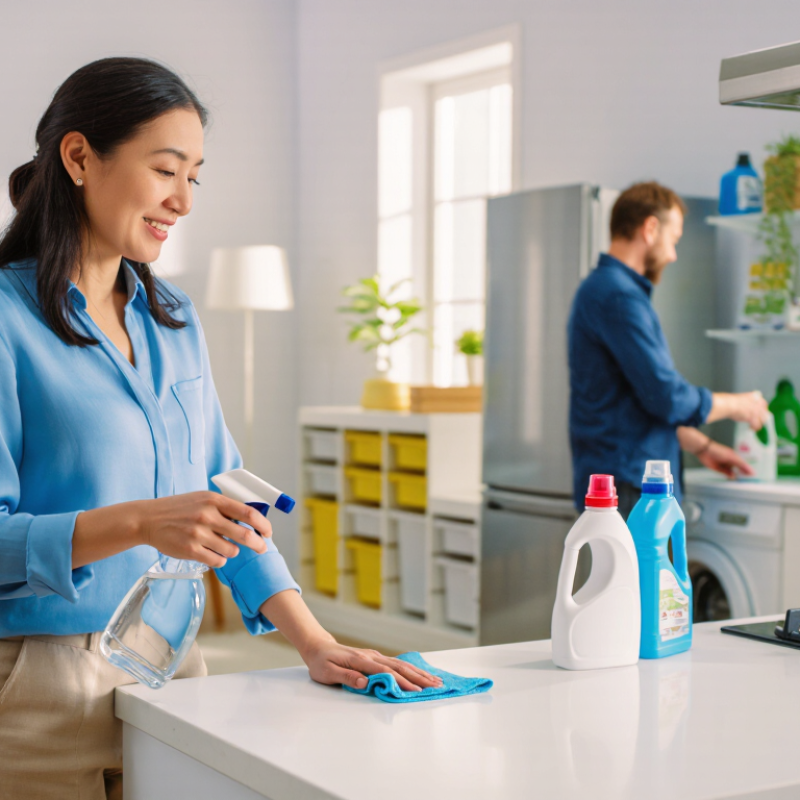
Global buyers are expanding beyond basic detergents. Core categories include laundry care, dishwashing, surface cleaners, toilet care, air care, and paper products. Grand View Research valued the global household cleaners market at about USD 38.5 billion in 2023. It also projects steady growth through 2030. Laundry products remain central, especially concentrated liquids, fragrance-free formulas, and low-temperature solutions. These details matter in regions with water shortages or expensive energy.
Surface care is becoming more specialized. Buyers now compare bathroom, kitchen, glass, and multi-purpose cleaners by safety, packaging, and performance. Euromonitor International identifies sustainability, convenience, and product efficacy as major home care influences. Refill systems and lightweight packaging can reduce shipping costs. However, they may require stronger local distribution planning. Air care is also growing, but preferences differ sharply between tropical, urban, and colder markets. A pleasant scent in one country may feel overpowering elsewhere.
Tips: Build category lists by household task, climate, and purchasing habits. Check ingredient rules, labeling languages, recycling systems, and transport conditions before ordering. Test packaging under heat, humidity, and rough handling. A product that works in a laboratory may fail on a crowded retail shelf. Market reports provide direction, not certainty. Local interviews still reveal inconvenient truths that spreadsheets miss. Expect some category forecasts to change. Pandemic habits, inflation, and water policies can quickly reshape demand.
Key Features of the Best Home Care Products
The best home care products combine safety, durability, and easy daily use. A reliable product should use sturdy materials, secure handles, and heat-resistant parts where needed. Clear instructions matter, especially for global buyers managing different languages and household standards. Check voltage, plug type, water resistance, and approved safety markings before purchasing. These details prevent costly returns and unsafe setups.
Tips:
Compare operating costs, not only the purchase price. Look for replaceable parts and accessible customer support. Test storage space before ordering. A compact design can still feel awkward in a small cabinet.
Performance should remain consistent after repeated use. Products with washable filters, sealed switches, and simple controls are easier to maintain. Energy efficiency also reduces long-term household expenses. Independent testing, transparent specifications, and realistic warranty terms add trust. Avoid vague claims such as “professional quality” without measurable evidence. In practice, even a well-designed product may disappoint if maintenance is difficult. I have seen attractive features become useless when replacement parts were unavailable. That weakness deserves attention. Buyers should also consider noise, cleaning time, packaging strength, and disposal instructions. A quiet, repairable product often creates more value than one with unnecessary digital functions. Temperature control, automatic shutoff, and child-safe construction can improve everyday confidence. Still, safety features should never replace careful reading of the manual.
How to Compare Quality, Safety, and Performance
When comparing home care products, quality starts with evidence, not appearance. Ask suppliers for batch records, material specifications, shelf-life data, and independent laboratory results. UNEP’s Global Chemicals Outlook II projects global chemical production could triple by 2050 from 2017 levels. That scale makes traceability essential. A reliable supplier should identify manufacturing sites, testing dates, and corrective actions clearly.
Safety requires more than a familiar label. Review the safety data sheet, ingredient disclosure, hazard classification, packaging integrity, and instructions for different markets. Check whether claims match recognized testing methods, such as OECD guidelines or applicable ISO procedures. I have learned that a glossy package can hide weak documentation. Still, documentation alone is not enough; incomplete translations and outdated certificates remain common purchasing risks. Buyers should verify certificates directly and request fresh samples before placing large orders.
Performance must be tested under real household conditions. Compare cleaning results, dosage, water hardness, temperature, storage stability, and surface compatibility. Record results using the same method for every sample. The OECD’s Global Plastics Outlook reports 353 million tonnes of plastic waste in 2019, potentially rising to 1,014 million tonnes by 2060 without stronger action. Packaging durability matters, but recyclability and material reduction matter too. A product that performs well once may fail after repeated use, so repeat-cycle testing deserves more attention.
Regional Needs and Buying Considerations Worldwide
2026 Best Home Care Products for Global Buyers
Regional needs should guide every home care purchase. In humid Southeast Asia, mildew control, fast-drying fabrics, and breathable storage matter. In dry Middle Eastern climates, dust removal and low-water cleaning are more practical. The World Health Organization reported in 2023 that 2.3 billion people still use polluting household cooking systems. Air filtration and ventilation therefore remain important in many markets. The International Energy Agency also notes that cooling already uses more than 10% of global electricity. Energy-efficient appliances can reduce household costs.
Water chemistry changes product performance. Hard water can leave white deposits on taps, glass, and laundry. Buyers should check local mineral levels before selecting detergents or descaling products. European households may prioritize concentrated formulas, refill systems, and clear ingredient disclosure. OECD data shows global plastic waste reached 353 million tonnes in 2019, nearly twice the 2000 level. Packaging is not a minor detail. Lightweight containers, recyclable materials, and leak-resistant closures support easier international shipping.
Safety evidence deserves careful attention. Look for recognized testing, dosage instructions, multilingual labels, and transparent allergen information. In cold regions, fabric care may require lower-temperature washing performance. In coastal areas, corrosion resistance is useful for metal fixtures and appliances. A practical mistake is choosing one universal formula. It may work well in one bathroom and disappoint in another. This is easy to miss. Buyers should compare climate, water quality, energy use, local standards, and after-sales support before ordering large quantities.