
Choosing an Organic Fertilizer supplier involves more than comparing prices. Buyers need products that suit their crops, soil conditions, and handling requirements. A supplier’s product range may include compost, plant-based meals, or pelletized blends, each with different nutrient profiles and release rates. Details matter. A label showing nitrogen, phosphorus, and potassium content is useful, but buyers should also ask how those figures are measured and updated. Recent test reports, ingredient traceability, and clear application guidance help build confidence.
This guide introduces ten suppliers for global buyers and offers practical points for comparing them. It considers product consistency, documentation, packaging options, export experience, and responsiveness to technical questions. For example, a buyer may need moisture-resistant 25-kilogram bags, bulk delivery, or a specification sheet before placing a trial order. Local requirements can differ, so confirm that product documents and claims fit the destination market. No list can prove that one supplier is best for every farm. Even careful comparisons have gaps: public information may be incomplete, and product performance can vary with soil and weather. Treat the shortlist as a starting point. Request current samples or test data, check references where possible, and compare written specifications before making a purchasing decision.
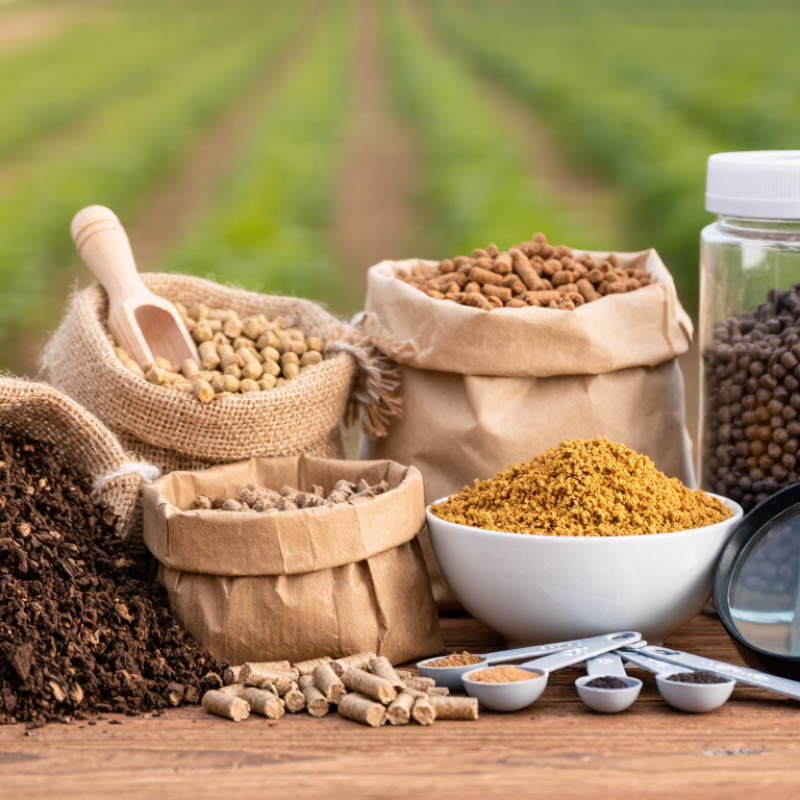
Organic fertilizers are materials derived from plant, animal, or microbial sources that supply nutrients and organic matter. Common types include compost, animal manures, digestate, and meals made from processed agricultural by-products. Production routes matter: composting stabilizes organic materials with air, while anaerobic digestion produces biogas and nutrient-rich digestate. Each route affects moisture, nutrient availability, and handling.
The FAO’s 2013 report, Food Wastage Footprint, estimated that about 1.3 billion tonnes of food were lost or wasted annually worldwide. This is potential feedstock, not a fertilizer-volume estimate; collection and processing determine what can actually be recovered. Nutrient grades usually list total nitrogen, available phosphate as P2O5, and soluble potash as K2O, expressed as percentages by weight. Organic products often have lower, less uniform concentrations than mineral fertilizers. Grades vary. A label alone cannot show how quickly nutrients become available. I still find this easy to overlook when comparing suppliers.
Tip: Request a recent batch analysis showing moisture, N-P2O5-K2O, and maturity. Check the batch. Compare application rates on a nutrient basis, not by bag weight alone.

FiBL and IFOAM reported 96.4 million hectares of organic agricultural land worldwide in 2022, alongside €135 billion in organic food and drink sales. These figures show a substantial market, but they describe different things: land under organic management and consumer spending. They do not reveal how much produce reached buyers, or how evenly demand was distributed.
For global buyers, scale can support broader sourcing options, yet it does not guarantee steady supply. A supplier’s usable volume depends on crop cycles, processing capacity, storage, and shipping schedules. Ask for recent harvest records, product specifications, and clear documentation for each shipment. A pallet’s moisture level or packaging condition can matter more than a supplier’s impressive acreage.
The figures also deserve a little caution. Reporting methods and market definitions can vary, so comparisons may not be perfectly like-for-like. Organic status alone says little about freshness, traceability, or delivery reliability. Buyers should check the details behind each claim, especially when sourcing from several regions. It takes time. And sometimes the paperwork is incomplete; that is a reason to pause and ask better questions, not to assume the numbers tell the whole story.
Global context: 96.4 million hectares of organic agricultural land and €135 billion in organic food and drink sales in 2022.
Organic agricultural land by region in 2022. Oceania accounted for the largest share, while Europe and Latin America were the next-largest regions. This chart provides market context and does not rank fertilizer suppliers.
For global buyers, supplier evaluation should begin with evidence, not polished claims. FiBL and IFOAM’s The World of Organic Agriculture 2024 reports 96.4 million hectares of organic farmland worldwide in 2022. It records organic agriculture in 188 countries. That scale makes traceability and repeatable product quality commercially important. Match each certificate to the exact product, production site, and destination market; check its scope and validity with the issuing body. Request batch-specific certificates of analysis, sampling dates, test methods, moisture, organic matter, and contaminant results. Paperwork matters.
Treat NPK as a measured guarantee, not a brochure figure. Compare declared N-P2O5-K2O values with independent laboratory results, and clarify whether nutrients are total or readily available. Ask for monthly output, peak-season capacity, feedstock consistency, storage conditions, and recent shipment records. Export experience is concrete: request destination examples, packaging specifications, port options, and document turnaround times. FiBL and IFOAM estimated global organic food and drink sales at about €135 billion in 2022. Growth does not prove supplier reliability. A polished brochure can still conceal uneven batches; review several consecutive lot reports before committing.
A useful supplier shortlist compares products, shipping regions, and farm requirements—not just catalog size. The ten profiles below represent common sourcing options, not a fixed ranking. Municipal green-waste composters in North America often supply bulk compost for field crops and landscaping. Manure compost producers in the United States and Canada may suit farms seeking locally available soil amendments. European and North American poultry-litter pellet makers offer easier storage and handling. Vermicompost producers in India and Southeast Asia typically serve nurseries, market gardens, and specialty growers.
Coastal suppliers in Atlantic and Pacific regions may sell seaweed-based products for targeted crop programs. Latin American processors can turn plant residues into compost or blended amendments. Sugarcane-producing regions, including Brazil and India, may offer bagasse-based materials. Mediterranean suppliers sometimes use olive and food-processing residues. Regional organic-input blenders in Europe and North America can combine materials for specific crops, while local distributors may offer smaller orders and shorter delivery routes. Fit varies. Product names alone reveal little about nutrient availability.
Ask for a recent, batch-specific analysis showing nutrient content, moisture, and relevant contaminant results. Confirm current certification and whether it covers the exact product and intended use. Request a sample when practical; a dusty pellet or wet compost can behave differently than expected. Samples matter. Compare delivered cost, minimum order size, and seasonal availability, since a suitable product can still arrive too late. These checks take time, and supplier data may not tell the whole story.
A practical sourcing guide organized by regional supply profile. Entries are not company rankings or named supplier recommendations.
| No. | Supplier profile | Typical sourcing region | Common product categories | Potential buyer fit | Key checks before purchase |
|---|---|---|---|---|---|
| 01 | Vermicompost and soil-amendment producers | India and South Asia | Vermicompost, composted farmyard manure, enriched organic soil amendments | Horticulture, nurseries, soil-improvement programs, and buyers seeking bagged or bulk materials | Ask for nutrient analysis, moisture content, maturity indicators, contaminant limits, and applicable organic-input documentation. |
| 02 | Livestock-manure compost suppliers | United States and Canada | Composted cattle, poultry, and mixed livestock manures; pelletized manure products | Large farms, landscaping distributors, and buyers needing established bulk transport networks | Verify composting process, pathogen and heavy-metal test results, nutrient variability, and local rules for manure-derived inputs. |
| 03 | Farm and green-waste compost producers | Western and Northern Europe | Green-waste compost, separately collected organic-waste compost, and, where permitted, digestate-derived products | Regional agricultural buyers, municipal projects, and customers prioritizing shorter supply chains | Confirm feedstock traceability, processing standards, contaminant screening, and whether the product is allowed under the buyer’s certification scheme. |
| 04 | Fish-processing by-product fertilizer suppliers | North Atlantic and Nordic regions | Fish-based liquid fertilizers, fish hydrolysates, and fish-meal-derived soil inputs | Specialty crop growers and buyers seeking nitrogen- and amino-acid-containing inputs | Check nutrient guarantees, processing method, odor and storage requirements, sustainable feedstock documentation, and import restrictions. |
| 05 | Seaweed-based input suppliers | Atlantic coastlines and parts of Asia-Pacific | Seaweed meals, extracts, and liquid seaweed products used as soil amendments or crop inputs | Horticulture, greenhouse production, and buyers interested in seaweed-derived micronutrients or biostimulant products | Distinguish fertilizer claims from biostimulant claims; request composition data, harvest-area information, and contaminant testing. |
| 06 | Oilseed-cake and plant-meal processors | South Asia and other oilseed-producing regions | Neem, castor, mustard, and other oilseed cakes, depending on local crops and processing | Crop growers seeking plant-derived nutrient sources and buyers able to manage slower nutrient release | Confirm plant species, residual oil content, nutrient analysis, permitted-use status, and any restrictions related to pest-control claims. |
| 07 | Sugar-industry co-product fertilizer suppliers | Brazil and other sugarcane-producing regions | Composted filter cake and other processed sugar-industry organic amendments | Plantation agriculture and regional buyers looking for locally available bulk soil amendments | Check feedstock and processing records, nutrient and pH data, transport economics, and applicable environmental permits. |
| 08 | Poultry-litter and manure-pellet suppliers | North America, Europe, and poultry-producing areas worldwide | Composted poultry litter, dried manure, and manure pellets | Buyers who need concentrated, easier-to-handle products for distribution or field application | Request pathogen testing, moisture and nutrient specifications, pellet durability information, and confirmation of permitted feedstocks. |
| 09 | Mixed organic-residue compost suppliers | Australia and New Zealand | Composted green waste, livestock-manure compost, and regionally available agricultural-residue products | Pasture, horticulture, and landscaping buyers sourcing within Oceania | Check biosecurity and import requirements, feedstock composition, product maturity, and whether the material meets destination-market standards. |
| 10 | Plant-residue and agricultural-waste processors | Southeast Asia | Composted crop residues and processed plant-based by-products; product availability varies by crop and locality | Regional farms and importers seeking plant-derived amendments or locally sourced bulk materials | Verify the exact feedstock, processing and sanitation steps, nutrient consistency, moisture, and export documentation. |
Buyer note: Product names such as “organic” or “natural” do not by themselves confirm eligibility for certified organic production. Check the destination market’s regulations and the relevant certification program, and obtain current product specifications and independent test results before ordering.
Before comparing organic fertilizer suppliers, ask for a current product label and a batch-specific certificate of analysis. Check whether the label identifies ingredients, nutrient levels, moisture content, and permitted uses. Names such as “composted plant material” can be vague. Ask what that phrase means in measurable terms. Request records linking the production lot to its raw materials and processing dates. A polished brochure is not traceability.
Import rules differ by destination and product category, so confirm requirements with the relevant authorities or a qualified customs professional before placing an order. A product accepted in one market may need extra testing, registration, or documentation elsewhere. Verify that certificates match the shipment’s exact formulation and batch. Small discrepancies matter. Keep copies of the label, analysis, origin documents, and supplier correspondence; missing paperwork can delay clearance.
Logistics deserve the same scrutiny as nutrient claims. Ask how the fertilizer is packed, protected from moisture, and stored before dispatch. For example, inspect proposed packaging details for pallet wrap, bag liners, and clear lot codes. Confirm port handling, estimated transit time, and responsibility for damaged cargo in writing. Samples help, but they may not represent every shipment. That is an imperfect safeguard, and worth acknowledging. A realistic supplier should explain how complaints are investigated and what evidence buyers must provide.
“Establish the work of our hands”
Psalm 90:17b