What is Compassionate Home Health Care and How Can It Help You?
In recent years, the significance of compassionate home health care has emerged prominently in the healthcare landscape. According to the National Association for Home Care & Hospice (NAHC), over 12 million Americans rely on home health services annually. This shift towards in-home care highlights a growing preference for personalized, compassionate care. Families increasingly seek alternatives to traditional settings, valuing the dignity and comfort of home.
Compassionate home health care focuses on both medical and emotional support. Patients receive tailored services, including skilled nursing, therapy, and companionship, all within their familiar environment. Research from the Agency for Healthcare Research and Quality indicates that patients who receive home health care often report higher satisfaction levels and improved overall well-being. However, challenges remain. The quality of care can vary significantly, and not all providers prioritize compassion.
In navigating these complexities, it is essential to evaluate potential home health care providers carefully. Look for those that emphasize patient-centered practices. Consider the qualifications of caregivers and their commitment to emotional support. Understanding these factors can lead to better choices, ensuring that compassionate home health care is both effective and meaningful.

What is Compassionate Home Health Care?
Compassionate home health care is a unique approach to healthcare. It emphasizes kindness and understanding. This type of care is not only about medical needs. It also focuses on emotional support and personal well-being.
Patients receive individualized care plans tailored to their specific needs. Caregivers take time to listen and understand patients. This builds trust and creates a comforting environment. For many, feeling seen and heard is essential for recovery. Sometimes, healthcare can feel impersonal. It’s vital to address not just physical ailments, but also to create meaningful connections.
Challenges can arise in this field. Not every caregiver may resonate with every patient. It’s important to find a good match for optimal results. The aim is to foster relationships that promote healing and comfort. This approach reminds us that health care is not one-size-fits-all. Each patient deserves unique attention and compassion. These elements make compassionate home health care truly effective.
What is Compassionate Home Health Care and How Can It Help You?
| Service Type |
Description |
Benefits |
Target Audience |
| Personal Care |
Assistance with activities of daily living such as bathing, dressing, and grooming. |
Promotes independence and dignity. |
Elderly individuals, disabled persons. |
| Skilled Nursing |
Medical care provided by licensed nurses, including medication management and wound care. |
Ensures proper medical care at home; reduces hospital visits. |
Patients recovering from surgery or chronic illnesses. |
| Physical Therapy |
Rehabilitation services to help regain mobility and function. |
Improves mobility and reduces pain. |
Individuals recovering from injuries or surgeries. |
| Occupational Therapy |
Therapy focused on improving daily living and work skills. |
Enhances quality of life and independence. |
Individuals with disabilities or health impairments. |
| Companionship |
Non-medical support, emotional companionship, and social interaction. |
Reduces feelings of loneliness; improves mental health. |
Seniors and individuals living alone. |
Key Services Offered in Compassionate Home Health Care
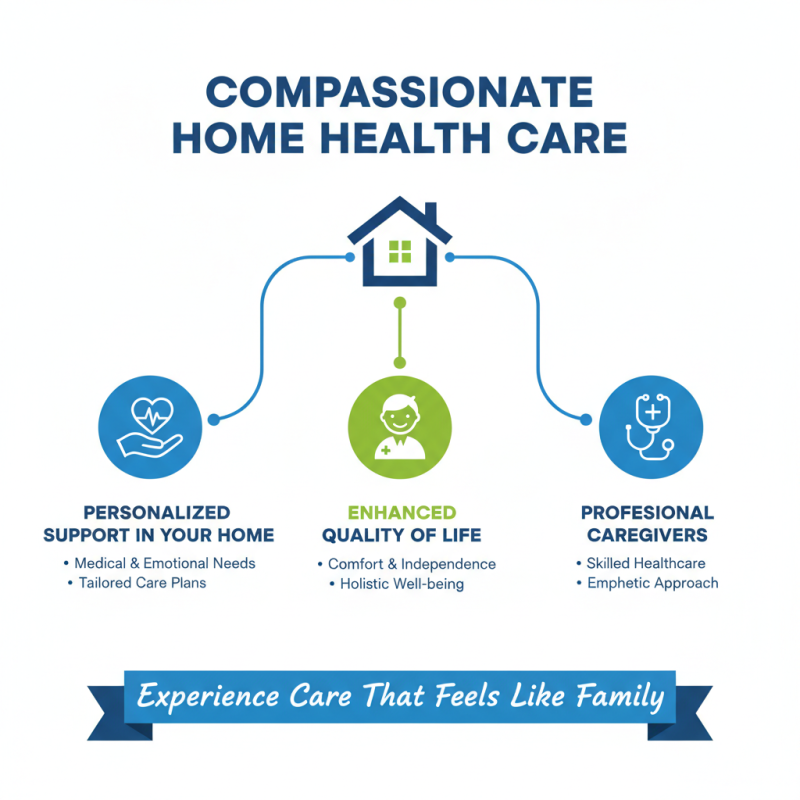
Compassionate home health care focuses on personalized support for individuals in their own homes. It is designed to enhance quality of life. Healthcare professionals offer services that cater to both medical and emotional needs.
Key services include skilled nursing care. This may involve monitoring vital signs and managing medications. Physical therapy is often included too, helping patients regain strength. Companionship services provide emotional support, promoting a positive environment. Having someone to talk to can change a person’s day.
Home health aides assist with daily activities, like bathing and meal preparation. This support can be crucial for those with mobility issues. However, not every caregiver fits every patient. Finding the right match can require patience and adjustments. Open communication is vital in this process. Compassionate care should be about connection, not just tasks.
Benefits of Compassionate Care for Patients and Families
Compassionate home health care focuses on providing holistic support for patients. It emphasizes understanding the emotional and physical needs of individuals. A study from the National Institute of Health reveals that patients receiving compassionate care reported a 30% increase in overall satisfaction with their health outcomes. This shows how important emotional support is during recovery.
Family members also benefit significantly from compassionate care. They experience reduced stress and increased confidence in managing their loved ones' health. According to a survey by the Caregiver Action Network, over 60% of caregivers reported feeling overwhelmed. Compassionate care can alleviate some of this burden, offering respite and support.
Yet, not all home health services excel in empathy and compassion. Some providers may prioritize efficiency over emotional connections. This could lead to dissatisfaction and burnout among caregivers. It's essential to reflect on care quality. Seeking services that balance efficiency with compassion is crucial for both patients and their families.
Benefits of Compassionate Home Health Care
Statistics on the Effectiveness of Home Health Care Services
Compassionate home health care is not just a service; it’s a lifeline for many.
Studies have shown that patients receiving home health care often experience better outcomes.
One key statistic reveals that nearly 75% of those served at home report feeling more satisfied compared to hospital care.
This emotional comfort is crucial for recovery, especially for elderly patients.
Home health care can enhance your quality of life. It allows patients to stay in a familiar environment while receiving essential medical attention.
Small details matter. For instance, caregivers can provide daily routines that help maintain physical health. Simple companionship can also reduce feelings of isolation.
Tip: When considering home health care, identify specific needs. Discuss these openly with caregivers. Clarity helps create a tailored approach.
Furthermore, effective home health care can lead to reduced hospital readmissions. Many patients experience fewer complications at home.
However, not every situation is ideal. Some patients may feel overwhelmed by home care tasks.
Tip: Seek training on basic care tasks if you are a caregiver. It might feel daunting, but practice makes a difference.
Understanding these responsibilities can ease stress over time.
Choosing the Right Home Health Care Provider for Your Needs
Choosing the right home health care provider is a crucial step for anyone seeking compassionate assistance at home. Start by identifying your specific needs. Do you require help with daily activities? Maybe you need skilled nursing services? Knowing what you need can guide your decisions.
Once you have a clear understanding, research potential providers in your area. Look for reviews or feedback from other patients. It's important to see if they have experience with your unique situation. Don't hesitate to ask questions during interviews. How do they handle medical emergencies? What training do their staff members have?
It’s also vital to trust your instincts. Sometimes a conversation might feel off. Maybe the caregiver doesn’t seem to listen well or rushes through discussions. These warning signs can lead to deeper reflections about your comfort and safety. After all, finding the right fit is not just about qualifications; it’s about feeling secure in your own home.