How to Choose Long Term Home Care for Your Loved Ones?
Choosing long term home care for loved ones is a daunting task. The industry of long term home care is growing rapidly. According to a recent report by the National Center for Assisted Living, over 800,000 people in the U.S. receive home care. This number is expected to rise as the population ages. Families often struggle to find the right balance between quality care and affordability.
Dr. Emily Johnson, an expert in geriatric care, emphasizes, "Choosing the right long term home care can profoundly impact a loved one's quality of life." This statement highlights the critical nature of decision-making in this area. It's not just about finding someone to help; it's about ensuring dignity and support.
Many services promise unparalleled care. However, families must do their research and ask tough questions. Budget constraints, service quality, and caregiver qualifications are essential factors. Sometimes, the finest care may be out of financial reach, leading to bittersweet choices. Careful consideration of these elements can make a significant difference in the long term.

Factors to Consider When Assessing Long Term Home Care Options
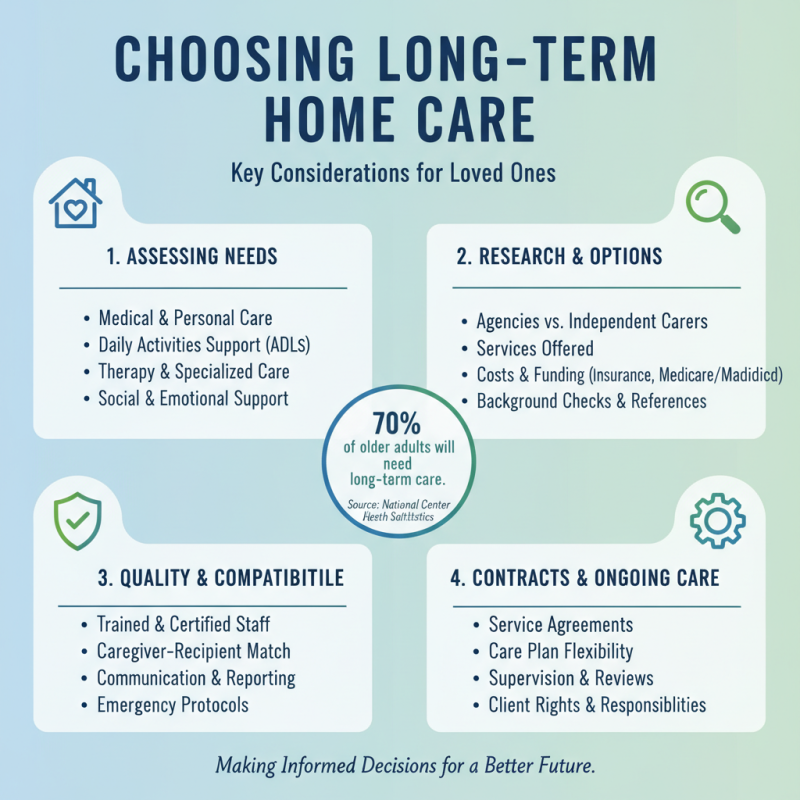
Choosing long-term home care for loved ones can be overwhelming. Various factors must be assessed to ensure quality and compatibility. According to a report by the National Center for Health Statistics, about 70% of older adults will need long-term care at some point. Understanding these needs is vital.
When assessing long-term care options, consider the individual's health status. Look closer at their daily activities. Measure how many tasks they can manage independently. For instance, can they bathe or cook? This evaluation will dictate the level of support necessary. Communication is key. Discuss preferences openly with your loved one.
Tip: Create a checklist of essential services. This may include medication management, personal care, and companionship. Availability of trained caregivers is equally important. Aim for providers who are licensed and have positive reviews.
Financial matters cannot be ignored. Long-term care can be costly. According to Genworth's Cost of Care Survey, the national median hourly rate for home health aides is around $27. Investigate coverage options, including Medicare and Medicaid. It is critical to know what your policies cover.
Tip: Consider community resources. Local agencies often provide support and information on services that may be beneficial. It's essential to explore all potential avenues for assistance and stay informed.
Types of Long Term Home Care Services Available for Your Loved Ones
Choosing the right long-term home care for loved ones involves understanding various types of services available. Many families face challenges when selecting appropriate care. It’s essential to consider the specific needs of your loved one.
In-home health care is a popular option. It includes skilled nursing services, physical therapy, and assistance with daily tasks. These caregivers can come in daily or weekly. They provide not only medical help but also companionship. It can be comforting for seniors to stay in their familiar surroundings.
Another type is personal care services. These services focus on help with personal hygiene, meal preparation, and light housekeeping. Families often overlook these needs, thinking they are minor. However, they are crucial for a loved one's comfort and dignity. Through careful assessment, families can find the right fit for their loved ones. It's a balance between independence and the necessary support.
Evaluating the Qualifications and Experience of Caregivers
Choosing long-term home care for loved ones is a significant decision. Evaluating caregivers' qualifications is essential. According to the National Association for Home Care & Hospice, nearly 90% of seniors prefer to age at home. Thus, the experience of caregivers becomes crucial.
When assessing caregivers, look for certifications. A caregiver may have passed basic training, but ongoing education is vital. Many organizations recommend that caregivers participate in continuous training every year. This can ensure they stay updated with best practices. Experienced caregivers often have backgrounds in nursing or physical therapy. An experienced caregiver can quickly assess a situation and make informed decisions.
However, qualifications alone don't guarantee quality care. Some caregivers may excel in their training but lack compassion. It’s important to observe their interactions with your loved one. A caring demeanor and effective communication can significantly impact the caregiver-client relationship. A 2021 study indicated that nearly 30% of families reported dissatisfaction with caregiver interactions. Prioritize empathy and teamwork alongside qualifications to ensure a positive care experience.
Understanding Costs and Payment Options for Home Care Services
Choosing long-term home care for loved ones can be overwhelming. Understanding the costs and payment options available is crucial. Home care services vary widely in price. Factors that affect costs include location, type of care needed, and hours of service. Basic companionship services may start at a lower rate, while skilled nursing care can be significantly more expensive.
Many families feel financial pressure when considering home care. Insurance may cover some costs, but often there are limits. Medicaid and Medicare have specific eligibility criteria that can complicate matters. Families sometimes struggle to understand these details. It's essential to communicate openly about costs with potential service providers. Asking the right questions can prevent future surprises.
Looking into other options is vital as well. Some families explore alternatives, like community programs or volunteer services. They may provide necessary support with fewer financial burdens. Balancing the needs of your loved one with your family's budget is not easy. It requires careful thought and sometimes tough decisions about care priorities.
Cost Comparison of Long Term Home Care Services
This chart displays the average monthly costs for various types of long-term home care services, providing insight into financial planning for caregiving needs.
How to Communicate Your Loved One's Needs to Care Providers
When choosing long-term home care, effective communication is crucial. Many families struggle to convey their loved one's needs. According to a report by the National Institute of Health, 80% of caregivers find it challenging to express medical needs accurately. Clear dialogue can ensure better care outcomes.
Start by listing specific needs. Use simple language that clearly describes daily routines, preferences, and any health conditions. Don't assume that providers will intuitively understand. Many caregivers overlook this. A lack of details can lead to mistakes. For instance, if your loved one prefers meals at specific times or needs help with mobility, communicate this clearly.
Frequent check-ins with care providers are also essential. This can help address concerns early. Research shows that 65% of families who maintain regular contact feel more satisfied with care services. Share any changes in health or behavior promptly. Consistent updates can lead to a better care plan tailored to your loved one's unique needs.