
Reliable Cell Rna Extraction begins before the tube reaches the centrifuge. Cell type, confluence, temperature, and handling time can quietly determine RNA quality. A warm bench, delayed lysis, or an overfilled column may leave degraded RNA before measurement begins. This matters because Nature’s 2016 survey of 1,576 researchers found that more than 70% had struggled to reproduce another scientist’s experiments (Baker, Nature, 2016). Reproducibility often starts with small laboratory habits.
The seven tips in this guide focus on practical control points. They cover rapid stabilization, gentle cell disruption, RNase prevention, suitable lysis volumes, careful phase separation, clean purification, and objective quality checks. The Human Cell Atlas project also emphasizes standardized sample handling because single-cell studies are especially sensitive to uneven processing. For low-input workflows, 10x Genomics technical documentation recommends minimizing environmental exposure and following validated handling steps closely. These recommendations are useful, but no protocol is flawless.
Your cells may behave differently.
A visible pellet does not guarantee intact RNA. A high concentration reading can also hide protein, salt, or solvent contamination. Use absorbance ratios, fluorometric quantification, and, when possible, electrophoretic integrity measurements together. Record the cell count, passage number, lysis time, reagent lot, and storage interval. That detail can explain a failed reverse-transcription reaction weeks later. Some troubleshooting advice sounds obvious. It still gets ignored. Treat each extraction as a measured experiment, not a routine chore, and adjust the workflow when the evidence disagrees with the protocol.
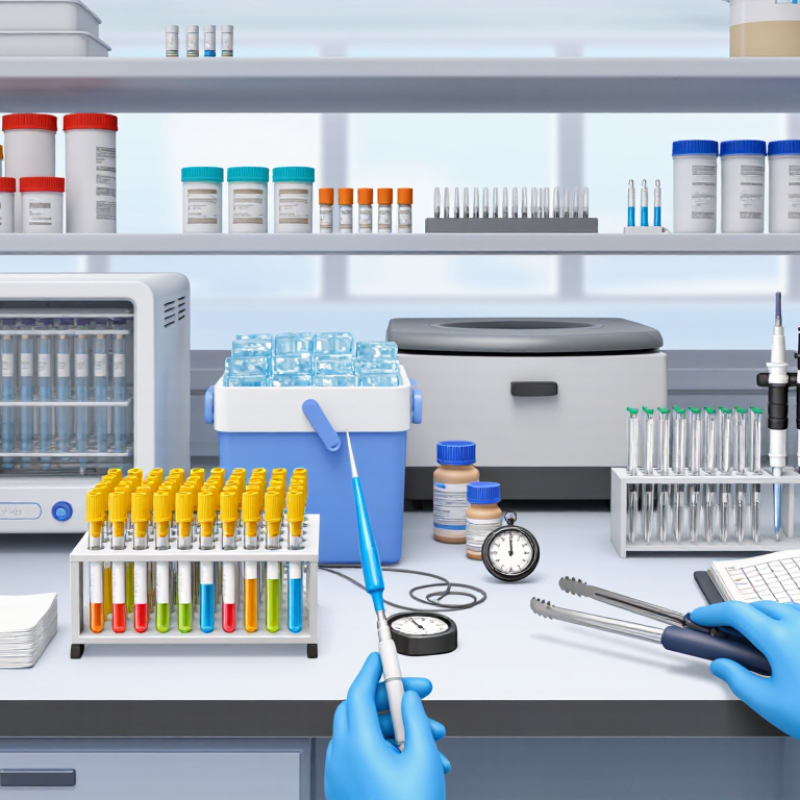
Prepare the cells before opening the extraction tube. Harvest them at consistent confluence, because crowded cultures can alter gene expression. Work quickly on ice, and wash once with cold, nuclease-free buffer. Remove the wash completely; leftover liquid can dilute lysis chemistry. Use the same cell number for every sample. Too many cells often produce viscous lysates and incomplete RNA recovery.
Prepare reagents before collection begins. Thaw solutions on ice, mix them gently, and check that reducing agents are fresh. Use certified RNase-free tubes, filtered tips, and clean gloves. Pre-label tubes, then keep them cold. A small delay matters. In my experience, the careless step is often tube handling, not the extraction chemistry. I still recheck the workspace after preparation, because one contaminated surface can compromise an entire batch.
Quality control should begin immediately after extraction. The MIQE guidelines recommend documenting RNA quantity, purity, integrity, and handling conditions for reproducible molecular analysis (Bustin et al., 2009). For many downstream applications, an A260/A280 ratio near 1.8–2.2 and an A260/A230 ratio near 2.0–2.2 indicate cleaner preparations. RNA integrity values above 7 are commonly preferred for sequencing workflows, although sample type can change that threshold. These targets are useful, not absolute. Evaluate them with the biology and the experiment design.

RNA quality often depends on the few seconds after lysis begins. Keep cells cold, and prepare every solution before collecting them. Delayed handling can activate RNases and reduce usable RNA. I have found that clean, dry tubes matter more than many beginners expect. Use RNase-free tools, fresh gloves, and separate work areas for extraction steps.
Control the lysis force. Add the lysis solution directly to the cell pellet, then mix gently until no visible clumps remain. Vigorous vortexing may shear RNA or create foam. Insufficient mixing is also risky. Seven practical controls help: standardize cell numbers, measure lysis volume, pre-cool materials, mix consistently, avoid overloading columns, limit freeze-thaw cycles, and record handling times. Small differences can change yield.
Do not leave lysed samples waiting. Move them promptly to the next step or stabilize them according to the validated protocol. Examine the lysate before continuing. Thick strands, floating clumps, or unusual cloudiness may signal incomplete disruption. I still occasionally see variable results after careful work, especially with dense cell pellets. That is a useful reminder to review cell health, confluence, and harvest timing. High yield alone proves little; intact RNA and reproducible measurements matter more.
Clean RNA starts before lysis. Keep cells cold, use certified RNase-free tubes, and change gloves after touching shared equipment. Record cell number and confluence. Overloaded columns often leave proteins, salts, and genomic DNA behind. The MIQE guidelines in Clinical Chemistry stress documenting RNA quality, quantity, and handling conditions for reliable gene-expression data. That record matters.
During purification, wash the lysate thoroughly and avoid disturbing the pellet or membrane. Add the recommended DNase step when genomic DNA could affect results.
Check purity with absorbance ratios: A260/A280 near 2.0 and A260/A230 between 2.0 and 2.2 usually indicate limited protein, phenol, and salt carryover.
Do not trust concentration alone. A cloudy eluate is a warning.
Use a small elution volume, but not one so small that recovery becomes inconsistent. Assess integrity with electrophoresis or an automated RNA quality system; a RIN score from 1 to 10 provides a practical reference, with values above 7 commonly preferred for sequencing and quantitative PCR. MIQE also recommends technical controls and repeat measurements.
My own weak point is rushing the final wash. It saves minutes, yet one drop of ethanol can inhibit downstream enzymes. Let the membrane dry properly. Then inspect the first few samples before processing the entire batch.
7 Cell RNA Extraction Tips for Better Results
Prevent RNase Exposure and Sample Degradation
Tip 1: Prepare an RNase-free workspace before collecting cells. Wipe surfaces, use clean tubes, and change gloves often. Tip 2: Keep samples cold from harvest to lysis. Ice slows degradation, but it does not stop it. Tip 3: Process cells quickly after removal from culture. Long pauses can reduce RNA quality. Start promptly.
Tip 4: Use the correct cell number for your extraction method. Overloaded samples may leave incomplete lysis and lower yields. Tip 5: Mix gently after adding the lysis solution. Vigorous handling can shear RNA and create foaming. Tip 6: Avoid repeated freeze-thaw cycles. Aliquot lysates when possible, and record storage times carefully. This small record can reveal problems later.
Tip 7: Check RNA quality before downstream work. Measure concentration, inspect purity ratios, and review an integrity profile when available. A high concentration does not always mean useful RNA. I once trusted yield alone and missed serious degradation. That was a preventable mistake. Keep tubes closed whenever possible. Even brief exposure can introduce RNases from gloves, dust, or equipment. If results vary between replicates, compare handling time, temperature, and cell density before changing the entire protocol.
Practical RNase-control priorities for reducing sample degradation during cell RNA extraction.
Priority scores range from 1 to 5 and represent practical importance in routine RNA workflows, not measured RNA-yield improvements. Keep samples cold, minimize handling time, and use RNase-free materials throughout the procedure.
Cellular RNA can degrade within minutes when samples warm or remain exposed to nucleases. Use chilled tools, nuclease-free tubes, and rapid processing. Keep samples frozen until lysis begins. This small discipline often matters more than increasing the starting cell number.
Tip 1: Record the cell count and sample source.
Tip 2: Inspect RNA concentration with a fluorometric method when possible. Absorbance alone can overestimate RNA because it also detects contaminants.
Tip 3: Check purity ratios. Values near 2.0 for A260/A280 and 2.0–2.2 for A260/A230 are commonly used benchmarks, not universal pass marks. MIQE guidelines (Bustin et al., 2009) recommend documenting RNA quantity, purity, integrity, and storage conditions before quantitative PCR.
Tip 4: Measure integrity before sequencing or transcript analysis. The widely used RNA Integrity Number scale ranges from 1 to 10; higher values usually indicate less degradation. Many sequencing workflows prefer values around 7 or above, although difficult tissues may require a different threshold.
Tip 5: Examine an electropherogram, not only one number.
Tip 6: Include an extraction blank to reveal reagent contamination.
Tip 7: Repeat questionable samples before downstream work.
I have found that borderline RNA can produce convincing but unstable results. That is easy to miss.
The ENCODE Consortium also emphasized standardized quality control for reproducible transcriptomic data (Nature, 2012).
A clean-looking tube proves very little.
“Establish the work of our hands”
Psalm 90:17b