
Reliable, Trusted and Compassionate Home Care Agency

What Is the Best Quality Home Health Care in China?

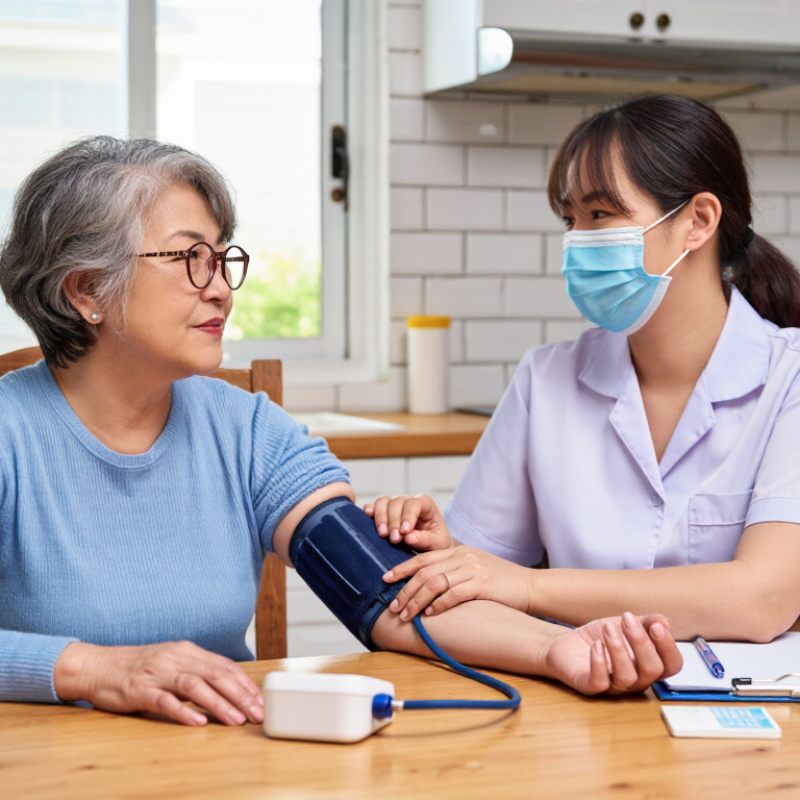
Choosing quality home health care in China is not simply a matter of finding the lowest hourly price. It means asking whether care is safe, accountable, and genuinely suited to the patient’s daily life. At home, small details matter: a nurse checks blood pressure beside the kitchen table, labels medicines clearly, and notices that an older adult is eating less than usual. These observations can prevent serious problems, but only when staff are trained to notice them.

Health-care researcher and surgeon Atul Gawande wrote, “Better is possible. It does not take genius. It takes diligence.” His words offer a useful standard for evaluating home-based services. Reliable providers should show valid professional credentials, documented care plans, emergency procedures, infection-control practices, and transparent pricing. Families should also ask how supervisors review visits and how quickly concerns receive a response. A warm smile is valuable, but it cannot replace clinical competence.

China’s home-care market varies widely between major cities and smaller communities. Local regulations, staffing levels, language needs, and hospital partnerships may influence service quality. A provider that works well for a recovering patient in Shanghai may not suit a rural family caring for someone with dementia. This comparison is often overlooked. Families should listen to patient feedback, observe one real visit, and question impressive promises. Quality is not a slogan. It is visible in clean equipment, respectful communication, accurate records, and consistent follow-up. Even strong services can improve, and honest evaluation should leave room for that uncomfortable truth.
What Is the Best Quality Home Health Care in China?

China’s Aging Demand: 296.97 Million People Aged 60+ in 2023 (NBS)

What Is the Best Quality Home Health Care in China?

China’s Aging Demand: 296.97 Million People Aged 60+ in 2023 (NBS)

China’s older population reached 296.97 million in 2023, according to the National Bureau of Statistics. This figure makes home health care a daily necessity for many families. Quality should begin with a clear assessment, not a sales promise. Nurses or trained caregivers should review mobility, medication routines, nutrition, memory, and fall risks. Family members also need practical guidance when care continues overnight.

The best service fits the home. A small apartment may need safer walking paths and bathroom support. A rural household may face longer travel times and fewer clinical resources. Reliable providers explain staff qualifications, care tasks, visit records, fees, and emergency procedures before service begins. They protect privacy and communicate changes quickly. A care plan should be reviewed after illness, a fall, or appetite changes. Paperwork matters.

Yet “best” is not always the most expensive option. Some families choose too many services and struggle with cost or confusion. Others rely on one familiar caregiver without backup support. Both choices deserve reflection. Trustworthy care combines clinical oversight, respectful daily help, and measurable follow-up. Ask who checks the work. Ask what happens when the caregiver is absent. Listen to the older person, too. Quiet discomfort can reveal problems that forms miss.


Defining Quality Through Safety, Outcomes, Staffing, and Patient Rights

What Is the Best Quality Home Health Care in China?

Quality home health care begins with safety, not attractive promises. China’s National Bureau of Statistics reported that people aged 65 and above reached 15.4% of the population in 2023. More families therefore need reliable support at home. WHO estimates that one in ten patients experiences harm during health care, with more than half considered preventable. Home visits should include medication checks, fall-risk reviews, infection control, and clear emergency procedures. Small details matter. A loose rug can change an entire care plan.

Outcomes must be visible and personal. Care teams should track pain, mobility, nutrition, wound healing, hospital visits, and caregiver stress. They should review these measures with families, not hide them in files. Staffing quality also matters. Workers need verified training, role clarity, supervision, and enough time for each visit. A rushed bath is not complete care. The WHO Global Patient Safety Action Plan 2021–2030 stresses learning from incidents rather than simply blaming individuals. That principle deserves stronger use in China’s home-care services.

Patient rights remain a practical test. Older adults should understand the care plan, costs, risks, and alternatives before agreeing. They need privacy and a straightforward complaint channel. Families should ask who enters the home and who reviews clinical changes. No system is perfect. Even a careful provider may miss a warning sign, so honest reporting and timely correction are essential.

What Is the Best Quality Home Health Care in China? - Defining Quality Through Safety, Outcomes, Staffing, and Patient Rights

Quality Dimension Measurable Indicator Recommended Quality Benchmark Evidence to Request Why It Matters
Patient Safety Care-plan risk assessment 100% of new patients assessed for falls, pressure injuries, medication risks, nutrition, infection risks, and emergency needs before or at the start of care. Completed assessment form, individualized care plan, reassessment schedule, and escalation procedure. Early identification of preventable risks is a core part of safe home-based care.
Medication Safety Medication reconciliation and administration records Medication lists should be checked at admission, after a hospital discharge, whenever medicines change, and during clinically appropriate reviews. Current medication list, allergy record, administration or visit notes, and documented communication with the prescribing clinician. Medication discrepancies can cause adverse drug events, particularly among older adults with multiple conditions.
Infection Prevention Hand hygiene and standard precautions Hand hygiene, appropriate personal protective equipment, sharps safety, waste handling, and equipment cleaning should follow current national and clinical infection-control requirements. Staff training records, infection-control checklist, incident log, and supplies available during home visits. Home visits involve close contact and may expose medically vulnerable patients to avoidable infections.
Emergency Readiness Response and escalation process A written process should define warning signs, emergency contacts, documentation requirements, family notification, and referral to emergency medical services when necessary. 24-hour contact arrangement, escalation flowchart, emergency drill or training record, and documented incident reviews. Home-care workers may be the first people to identify rapid deterioration.
Clinical Outcomes Goal-based care-plan outcomes Each patient should have documented, measurable goals that are reviewed at defined intervals and updated when the patient’s condition changes. Baseline assessment, progress notes, functional measures, symptom records, and discharge or transition summary. The quality of care is better assessed by patient progress and goal achievement than by visit volume alone.
Functional Independence Activities of daily living and mobility Care plans should monitor relevant activities such as bathing, dressing, eating, toileting, transfers, walking, and use of assistive devices. Standardized or clearly defined functional assessment, therapy recommendations, and caregiver training notes. Maintaining independence and preventing avoidable decline are central aims of home-based care.
Staffing and Competence Qualifications, supervision, and continuing education Staff should work within their legal scope of practice, receive role-specific orientation, maintain required credentials, and have access to clinical supervision. Credential verification, job description, training records, competency assessments, and supervisor contact details. Competence and supervision reduce errors and support consistent care across different homes.
Continuity of Care Care-team stability and handover quality Patients should know who is responsible for their care, receive advance notice of material schedule changes, and have documented handovers when staff change. Named care coordinator, visit schedule, substitution policy, handover notes, and missed-visit records. Reliable continuity improves communication and helps staff recognize changes in a patient’s condition.
Patient and Family Rights Informed consent and participation in decisions Patients should receive understandable information about services, fees, expected benefits, risks, alternatives, and the right to accept or refuse care. Signed consent, service agreement, care-plan approval, interpreter or accessibility arrangements, and decision-making records. Respect for autonomy is an essential patient-safety and ethical requirement.
Privacy and Dignity Personal-information protection Only necessary information should be collected, access should be restricted to authorized personnel, and personal information should be handled according to applicable Chinese privacy and data-protection laws. Privacy notice, authorization process, access controls, confidentiality training, and breach-reporting procedure. Home care takes place in private living spaces and involves highly sensitive health information.
Complaints and Accountability Complaint resolution and adverse-event reporting Patients should have a clear, accessible complaint channel, receive confirmation that complaints were received, and be informed about investigation and corrective-action procedures. Complaint policy, response timelines, anonymized quality-improvement reports, and adverse-event review records. Transparent reporting helps identify recurring problems and demonstrates organizational accountability.
Care Coordination Communication with clinicians and caregivers Significant changes in symptoms, function, medication, or safety risk should be documented and communicated promptly to the appropriate clinician or authorized family caregiver. Communication log, referral records, discharge summary, and documented follow-up actions. Good coordination reduces fragmented care and unnecessary hospital visits.
Interpretation: A high-quality home health service should be evaluated using documented safety processes, measurable patient outcomes, qualified and supervised staff, continuity of care, and enforceable patient rights. The benchmarks above are quality criteria rather than performance claims about any specific provider.
Reference framework: The indicators are aligned with widely used principles from the World Health Organization’s quality-of-care and integrated-care frameworks, international patient-safety practice, and applicable Chinese requirements concerning licensed practice, informed consent, personal-information protection, and medical-service management. Local legal and regulatory requirements should be checked before use.

Comparing Providers by Licenses, Nurse Credentials, Care Plans, and Costs

What Is the Best Quality Home Health Care in China?

Quality home health care in China begins with valid licenses, not attractive advertisements. Families should verify the provider’s registration through the relevant local health authority. The service scope should clearly include home nursing, rehabilitation, or elderly care. A beautiful office proves little.

Nurse credentials deserve close attention. Ask whether nurses hold recognized nursing licenses and have experience with the patient’s condition. For diabetes, stroke recovery, or wound care, practical training matters. During a home visit, a skilled nurse should check medication records, mobility, nutrition, and safety risks. The care plan must be written, specific, and adjustable. It should state visit frequency, treatment goals, emergency contacts, and family responsibilities. Vague promises create trouble.

Costs require careful comparison. Request an itemized quotation covering visits, travel, supplies, night care, and holiday surcharges. A low hourly rate may exclude wound materials or follow-up calls. Payment terms should be documented clearly. Families can also ask how complaints are handled and whether clinical records remain confidential. I once assumed that more visits always meant better care; that view was too simple. Some patients need fewer visits but closer monitoring between them. No checklist replaces honest communication, and even a well-designed plan may need revision after one difficult night.

What Is the Best Quality Home Health Care in China?

Comparing providers by licenses, nurse credentials, care plans, and costs

The chart separates China's national compliance baseline from items that must be checked with each provider. Medical services require appropriate institutional authorization, and nurses performing regulated nursing work must hold valid registration. Written care plans and pricing are not represented by one universal national standard, so their quality, transparency, and detail should be verified directly before hiring.

Assessing Workforce Capacity: 5.63 Million Registered Nurses in 2023 (NHC)

What Is the Best Quality Home Health Care in China?

Workforce capacity matters when families assess home health care in China. The National Health Commission reported 5.63 million registered nurses in 2023. This figure suggests a large clinical foundation for community and household services. However, it does not prove that every nurse has home-care training. Hospitals and homes require different skills. A home nurse may work with limited equipment, changing family expectations, and less immediate medical support. Training varies.

Small details matter. During a home visit, a qualified nurse should check vital signs, review medicines, inspect skin, and record changes clearly. For an older patient with limited mobility, repositioning technique can prevent pressure injuries. For a person recovering after surgery, careful wound observation may identify infection risks early. Nurses should also explain warning signs in simple language. Families need to know when to seek urgent medical attention, rather than relying on uncertain online advice.

Reliable services usually have documented care plans, supervision, privacy safeguards, and clear communication with physicians. They should match assignments to clinical needs, not merely staff availability. The national workforce figure is encouraging, yet capacity remains uneven across cities, counties, and rural communities. More nurses do not automatically mean better home care. Practical experience, continuing education, accurate records, and respectful communication still require close attention. Further evaluation should examine how many registered nurses regularly provide home visits and how consistently their work is reviewed.

Selecting the Best Provider with a Step-by-Step Quality Evaluation Framework

What Is the Best Quality Home Health Care in China?
Selecting the Best Provider with a Step-by-Step Quality Evaluation Framework

Quality home health care begins with clear verification, not attractive promises. Check the provider’s local registration, service permits, and professional qualifications. Ask whether nurses receive continuing education and follow written care protocols. A qualified clinical supervisor should review complex cases and medication changes. Request evidence, not only confident answers.

Evaluate the care process during a home visit. Can staff explain the care plan in plain language? Do they check temperature, blood pressure, mobility, and changes in mood? Look for clean equipment, sealed supplies, hand hygiene, and respectful communication. Ask how emergencies are escalated and how family members receive updates. Real quality often appears in small details.

Review sample records with personal information removed. They should show visit times, observations, actions, and follow-up needs. Speak with recent clients, but treat every recommendation carefully. One family’s experience may not match an older patient’s needs. Compare prices by service hours, travel fees, equipment, and night support. The cheapest option can become expensive when visits are rushed.

No provider performs perfectly. Ask how complaints, missed visits, and care errors are documented and corrected. A trustworthy team should discuss weaknesses without becoming defensive. During selection, record your questions and compare answers line by line. That simple habit can reveal gaps before care begins.